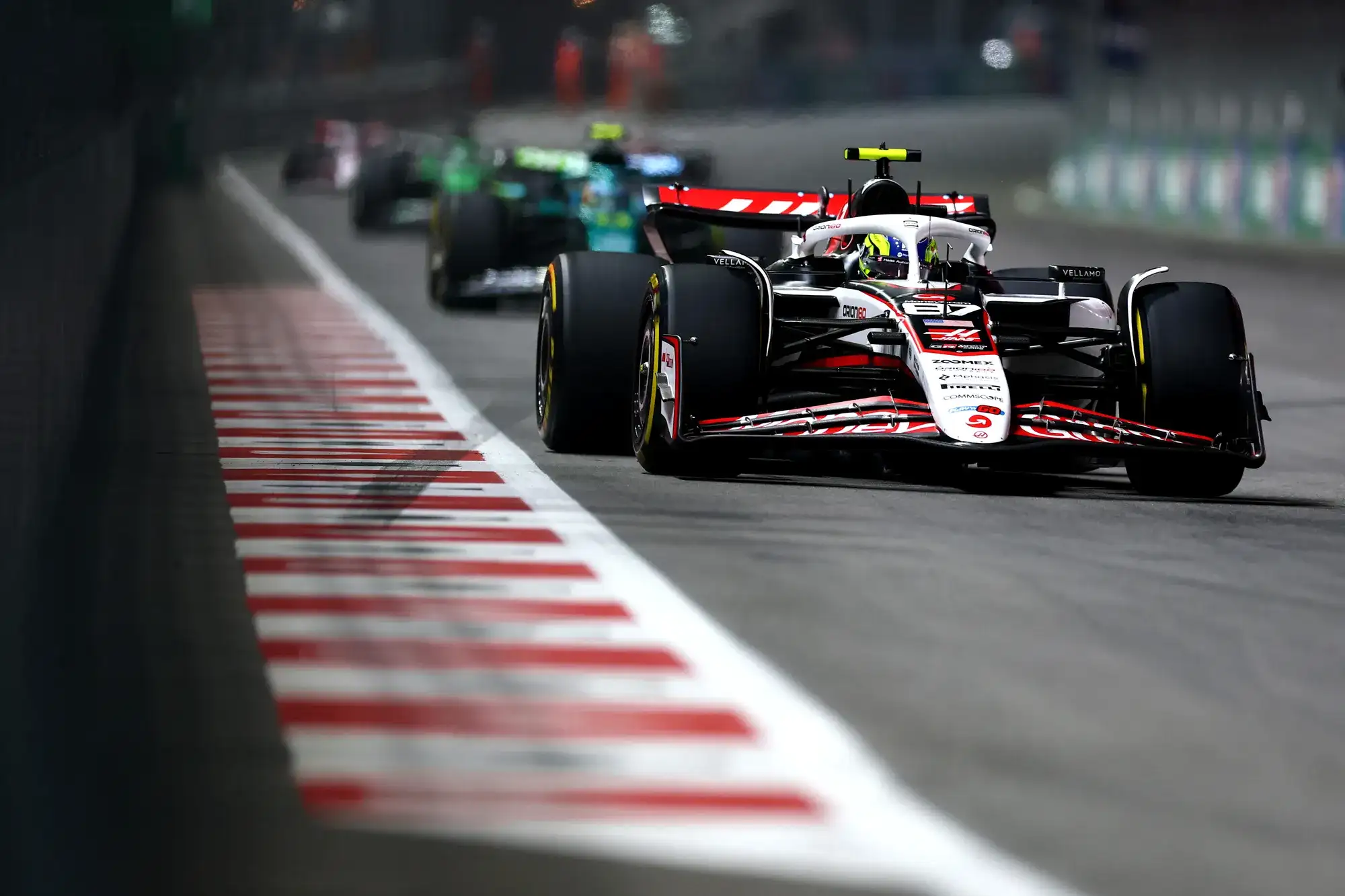
The Short Answer: Las Vegas F1 Weather Is a Betting Variable
The Las Vegas Grand Prix runs at night in November, when desert temperatures can fall quickly. Cooler air and track temperatures may make tire warm-up more difficult, especially after the start, pit stops and safety car periods.
Weather is one of several race-week variables. This guide explains what cooler conditions may mean before the race, during the opening laps, after a safety car and in the final stint.
- Pre-race markets
- The cold opening laps
- Safety car windows
- The final stint
First, here's why the cold matters so much.
Why Cold Air Slows Pirelli Tire Warm-Up
F1 tires perform best within a working temperature range. On a cool street circuit, drivers may need additional time to build tire temperature and grip.
The layout and track conditions both make this harder:
- Long, flat-out straights let the tires cool between corners.
- Low-downforce setups, which teams choose for those straights, put less energy into the rubber.
- A cold, low-grip surface adds to the problem.
Drivers face a tradeoff. Push too hard early to build heat, and they risk sliding, graining, or damaging the tires. Drivers who overcook their tires in the opening laps tend to fade later in the stint.
How to Bet Each Phase of the Las Vegas Grand Prix
That tradeoff plays out differently as the night goes on, and each phase calls for a different read on F1 cold tire strategy. Take each phase in order.
Phase 1: pre-race markets
Before the race, practice data may show how cars manage cooler conditions. Car setup, driver inputs and track temperature can all affect tire warm-up.
Because performance changes from season to season, use current race-week information, including official timing data, practice sessions held closest to race time and long-run pace. Check the evidence yourself:
- Official F1 timing data from previous Las Vegas races, especially lap times across the first stint
- Practice sessions run closest to race start time, since they reflect race-night conditions best
- Long-run pace rather than single fast laps, which can hide tire struggles
Differences between qualifying pace and long-run pace may affect race, podium and head-to-head prices.
Phase 2: the cold opening laps
The start is where cold tires matter most. Grip is low, braking zones are tricky, and the walls of a street circuit leave little room for error.
Watch lap times, not just track position. Positions can shuffle before the tires settle. A driver who loses a spot or 2 early while managing temperature isn't necessarily in trouble.
Phase 3: safety car betting windows
Cold tires and cold brakes may contribute to more lockups and mistakes. On a circuit lined with barriers, those mistakes can lead to a safety car.
The restart is the key moment. Behind a slow safety car, tires lose heat again, so every restart briefly recreates the cold opening laps. Drivers who handle the first stint well often handle restarts well too.
If you're betting live, keep an eye on the timing screens during a safety car period. Odds can move quickly, and the field may reset in ways the pre-race markets didn't expect.
Phase 4: the final stint and live bets
Once tires are fully up to temperature, the race usually settles down. Pace becomes more predictable, and the faster cars tend to rise.
Factors to watch in the final stint include improving lap times, tire age after restarts and whether an early leader used more tire life to build a gap. There are 3 important things to do:
- Back steady first-stint drivers whose lap times improve as the tires come in
- Be cautious with early leaders who built their gap by pushing hard on cold tires
- Watch tire age after restarts, since fresher rubber warms faster
Watching From Race Week in Las Vegas
Being in the city during race week gives you a feel for the conditions that no forecast can match. Step outside near midnight and you'll understand why the tires struggle.
If you want to follow the action with fellow fans, the Caesars Race & Sportsbook at Paris Las Vegas sits right on the Strip. It's a welcoming spot to watch the screens and track live odds as the race unfolds.
Your Next Step: Build a Race-Night Watchlist
Before the race, check the forecast, review long-run practice data and note current tire and track conditions. Live betting moves fast, and it's easy to chase a moment. Set a budget before the race starts, and stick to it no matter what happens on track.
- Check the race-night forecast for air temperature and wind.
- Review long-run lap times from the practice session closest to race start.
- Pick 2 or 3 drivers who kept their pace steady on long runs.
- Note one early leader you'd be willing to bet against if their tires start to fade.
- Set your budget and decide in advance how much you'll hold for live bets.
With that short list in hand, you'll be ready to act when the cold opening laps shake up the order.
RESPONSIBLE GAMING
You must be 21 or older to gamble. Know When To Stop Before You Start®. Gambling problem? If you or someone you know has a gambling problem, crisis counseling and referral services can be accessed by calling 1-800-GAMBLER (1-800-426-2537).