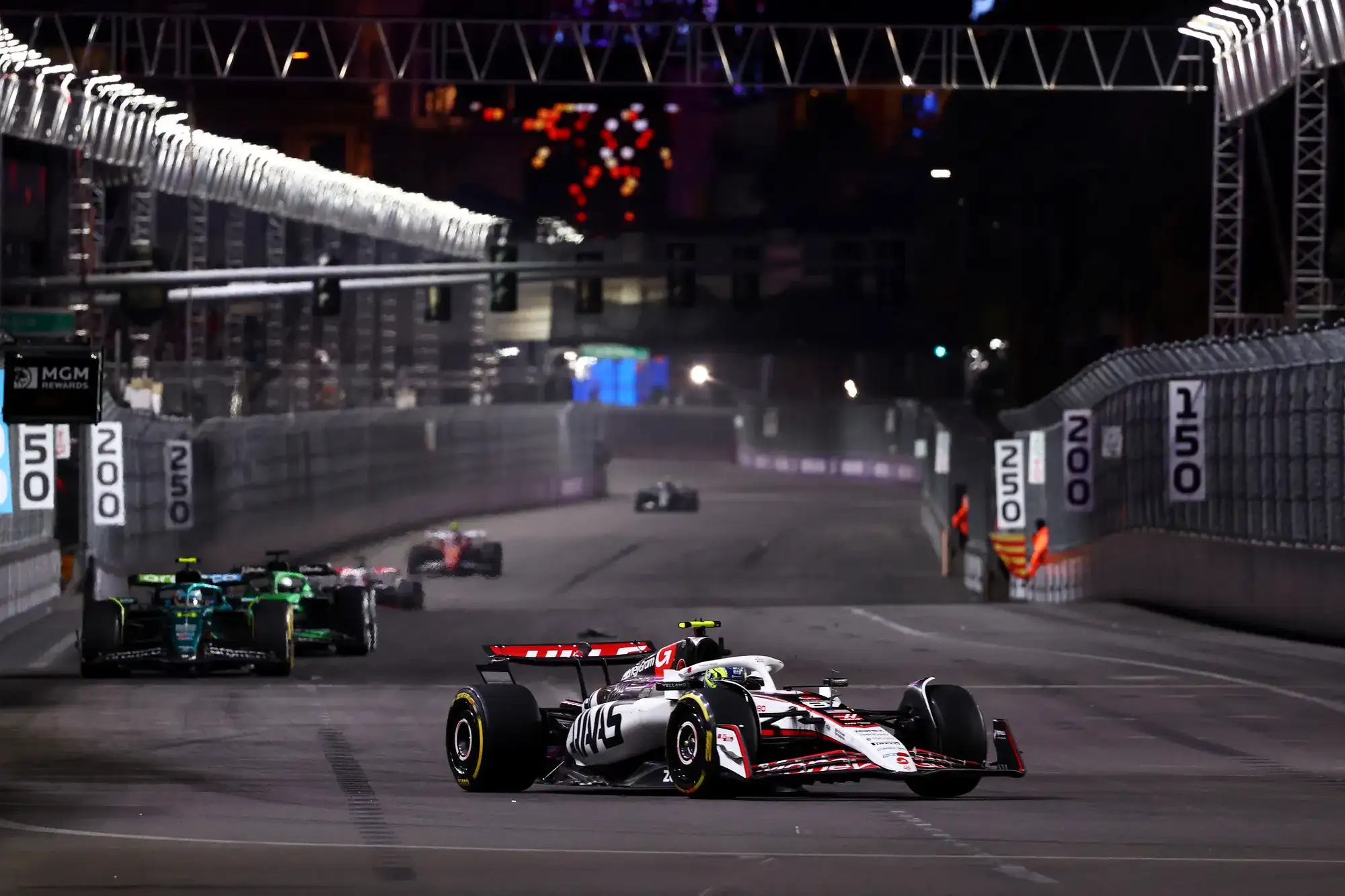
A qualifying result should change your race bet only as much as the track allows. On circuits where passing is hard, the grid tends to hold, so pole carries real weight. Where overtaking is easier, Saturday matters less and Sunday's race pace matters more.
That one idea—overtaking difficulty—is a simple way to start reading the odds every time qualifying ends. Here's how to apply it track-by-track and it works on Caesars Sportsbook F1 markets.
Why Overtaking Difficulty Sets the Value of Pole Position
Qualifying sets the starting order. If drivers can't pass, the starting order often becomes the finishing order, and the front-row starters inherit a big advantage.
Long straights and heavy braking zones change that picture, because a faster car can recover from a poor grid slot. Pole still helps, but it's a head start rather than a lock.
Think of it as a sliding scale. The harder it is to pass, the more a qualifying result should move your view of the race.
The Qualifying-to-Race-Win Correlation, Track-by-Track
The link between qualifying position and race wins follows a broad pattern. It runs high at Monaco and Hungary, lower at Monza, and somewhere in between at Las Vegas. The table below summarizes that pattern.
| Track | Overtaking difficulty | Qualifying-to-race link | What it means for your bets |
| Monaco | Very hard | High | Grid position carries heavy weight |
| Hungary | Hard | High | A strong qualifying lap firms up your race view |
| Las Vegas | Moderate | Intermediate | Pole helps, but the details decide |
| Monza | Easier | Lower | Race pace can outweigh grid slot |
High correlation: Monaco and the Hungaroring
Monaco's narrow streets and tight barriers leave almost no room to pass. Track position is everything, so strategy calls and pit-stop timing usually decide any changes at the front.
The Hungaroring is a permanent circuit, but its twisty layout and short straights make passing difficult too.
At both venues, a strong qualifying lap from a contender should firm up your race-winner and podium views. Head-to-head bets often come down to who started ahead.
Lower correlation: Monza
Monza is built for speed. Its long straights give chasing cars real chances through slipstreaming and DRS, so a driver in a quick car who qualified out of position can climb through the field.
That makes pole less decisive here. Weigh race pace from practice alongside the grid, and treat head-to-heads between closely matched cars as more open. Sochi, which no longer hosts a Grand Prix, is a historical example of the same lower-correlation pattern.
In between: Las Vegas
The Las Vegas Strip Circuit is a street track, but its long straight along the Strip gives drivers a passing opportunity. Cool night conditions can also make tires harder to bring up to temperature, which adds uncertainty in the opening laps.
Pole is worth something, but it isn't a guarantee, so it’s important to carefully read the grid of this specific race.
F1 Line Movement After Qualifying
Before qualifying, prices reflect practice pace, car form and past results. Once the grid is set, F1 race winner odds and related markets update to reflect the new starting order. That order carries different weight at different tracks.
These markets tend to react most:
- Race winner, especially for the pole sitter and any fast driver who qualified out of position
- Podium finish, where a front-row start shortens prices most at high-correlation tracks
- Driver head-to-heads, which shift when teammates or rivals swap grid places
Watching qualifying live helps you understand each line move as it happens. You'll know whether a driver lost time to traffic, a yellow flag, or a mistake. That context tells you whether a grid slot reflects true pace.
Pole Position Betting: When to Back It and When to Fade It
Because Las Vegas sits in the middle, your decision could depend on the details.
When to back pole
Back the pole sitter when both of these hold:
- Their long-run practice pace matched their qualifying speed.
- Their closest rivals start farther back.
When to fade pole
Consider fading pole — or at least proceed with caution — in either of these cases:
- A faster race car qualified out of position, such as after a compromised lap.
- The pole sitter struggled to keep tires in their working window during practice, since cool conditions can expose that weakness on race day.
Your Pre-Race Checklist in the Caesars Sportsbook App
Run through these steps after qualifying and before lights out:
- Place the track on the sliding scale: high, middle, or lower overtaking difficulty.
- Note any driver who qualified out of position, and why.
- Compare long-run practice pace with the final grid.
- Check how race-winner, podium and head-to-head prices moved after the session.
- Decide whether each new price matches your read of the track, then bet only what fits your budget.
The Caesars Sportsbook app lets you check prices and place your bet as soon as you've worked through the list.
If you're in town for race weekend, the Caesars Race & Sportsbook at Paris Las Vegas is a comfortable place to follow qualifying in person. Learn more about the casino and sportsbook at Paris Las Vegas.
Put the Scale to Work This Weekend
Before the next qualifying session, pick the upcoming track and place it on the scale. Then open the Caesars Sportsbook app once the grid is set and see how the lines settle against your read.
RESPONSIBLE GAMING
You must be 21 or older to gamble. Know When To Stop Before You Start®. Gambling problem? If you or someone you know has a gambling problem, crisis counseling and referral services can be accessed by calling 1-800-GAMBLER (1-800-426-2537).