
Key Takeaways
- Caesars Palace has remained recognizable by evolving while preserving its Roman-inspired identity and original guest-centered vision
- Entertainment defined the resort from Andy Williams on opening night to modern superstar residencies like Josh Groban and Tim McGraw at The Colosseum
- Spago at The Forum Shops introduced the first celebrity-chef restaurant to the Las Vegas market in 1992
- Sports, stunts, film, and television turned Caesars Palace into a cultural symbol recognized beyond the Las Vegas Strip
- Caesars Palace has 5 hotel towers, 3,500+ rooms, 22 restaurants, 10 bars and lounges, 7 pools, and The Colosseum
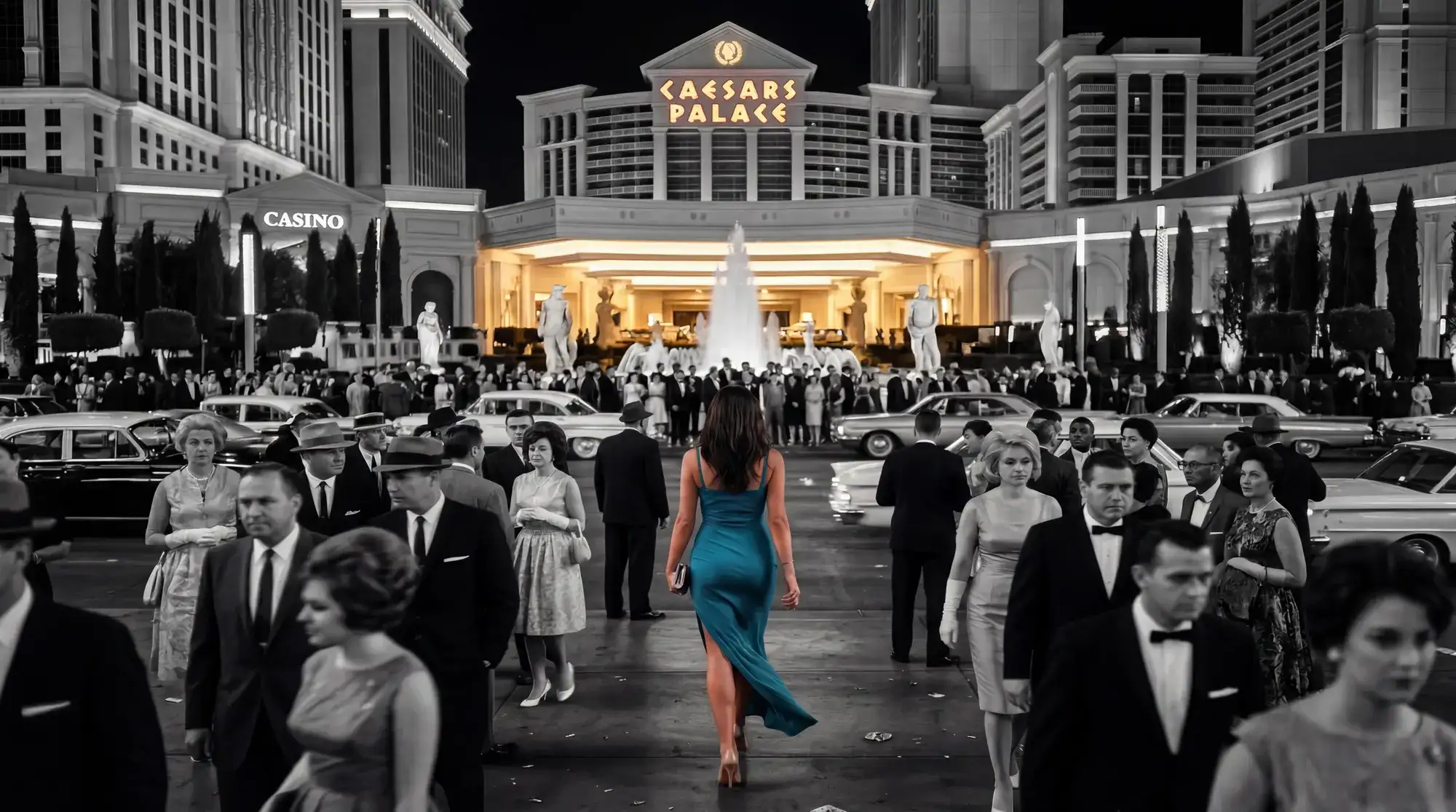
Caesars Palace remains one of the most iconic resorts in Las Vegas because it did more than reflect the city. Across 6 decades, Caesars Palace helped shape the entertainment, dining, sports, luxury hospitality, and cultural moments travelers now associate with Las Vegas. Continual reinvention keeps that original vision relevant today.
A Palace Designed for Everyone
Caesars Palace began with a big idea: create an immersive palace where every guest could experience theatrical luxury. Hotel operator, builder, and designer Jay Sarno conceived the resort, and construction began in 1965. Caesars Palace opened on August 5, 1966, as a 680-room Roman-themed destination with unusually lavish accommodations for its era.
The name reinforced the concept. The missing apostrophe signaled that Caesars Palace wasn't the palace of one Caesar. Caesars Palace was intended for everyone who entered. That simple brand story still explains the resort's combination of spectacle, hospitality, and accessibility better than a list of amenities ever could.
Entertainment That Changed Las Vegas
Entertainment has been central to Caesars Palace since opening night, when Andy Williams took the stage on August 5, 1966. Circus Maximus later welcomed artists including Aretha Franklin, Frank Sinatra, Ella Fitzgerald, Count Basie, Sammy Davis Jr., Ray Charles, Diana Ross, and Tom Jones.
The next defining chapter arrived with The Colosseum. The venue opened on March 25, 2003, with the debut of Celine Dion's "A New Day..." residency. The Colosseum created a new home for more major residencies, later welcoming Elton John, Cher, Bette Midler, Mariah Carey, Usher, Sting, Adele, Garth Brooks, and Kelly Clarkson.
Caesars Palace kept translating its original promise for each generation. The venue changed. The production scale changed. The core idea didn't: visitors could see the world's most recognized performers in a destination built around spectacle.
How Caesars Palace Helped Transform Las Vegas Dining
Caesars Palace helped move Las Vegas dining from an amenity to a reason to visit. In 1992, Wolfgang Puck opened Spago at The Forum Shops at Caesars Palace. This was the first celebrity-chef restaurant in Las Vegas and a catalyst for a new era of destination dining on the Strip.
The resort continued building relationships with renowned chefs and restaurant brands, including:
- Restaurant Guy Savoy
- Gordon Ramsay Hell's Kitchen
- Amalfi by Bobby Flay
- Chef Dominique Ansel—James Beard Award winner and creator of the iconic Cronut®
- Peter Luger Steak House
- Nobu Restaurant
The world's first Nobu Hotel also opened at Caesars Palace alongside the restaurant.
Caesars Palace shows how individual restaurants gathered into a culinary legacy, establishing the modern expectation that a Las Vegas resort should also be a dining destination.
The Moments That Became Las Vegas Legends
Caesars Palace built cultural relevance through moments that went beyond lodging and gaming. On December 31, 1967, Evel Knievel attempted to jump the resort's fountains on a motorcycle. Robbie Knievel successfully cleared the fountains in 1989, and later stunt performers continued that tradition of headline-making spectacle.
The resort also became a landmark in sports history. Caesars Palace hosted championship boxing involving Muhammad Ali, Larry Holmes, Sugar Ray Leonard, Thomas Hearns, Marvin Hagler, Mike Tyson, Evander Holyfield, and Oscar De La Hoya. Tennis events, the Caesars Palace Grand Prix, an outdoor hockey event, and other competitions expanded the property's reputation as the "Home of Champions."
This shows a pattern: Caesars Palace didn't only provide a venue, it used the scale and theatrical identity of the resort to turn events into Las Vegas stories people remembered.
Hollywood's Las Vegas Backdrop
Film and television made Caesars Palace visual inseparable from Las Vegas. "The Only Game in Town" (1970) was the first movie filmed at Caesars Palace. "Rain Man" filmed for more than 6 weeks at Caesars Palace, including a memorable suite scene overlooking the Strip. And "The Hangover" later introduced the property to a new generation of viewers in 2009.
The production history reaches far beyond those familiar titles. Caesars-owned records include:
- Fools Rush In
- Dreamgirls
- Iron Man
- The Big Short
- Godzilla
- Queer Eye
- Hacks
Productions used the casino, guestrooms, villas, pools, restaurants, rooftops, entrances, and public spaces as unmistakable Las Vegas settings. Caesars Palace documented the full range of productions and the specific locations that made the resort part of the silver screen culture.
How Caesars Palace Continues to Reinvent Itself
Caesars Palace remains relevant because it treats reinvention as part of its identity. The original property expanded through new towers, refreshed accommodations, new dining concepts, modern entertainment venues, nightlife, wellness, and luxury experiences. Each phase added a new reason to visit without removing the Roman-inspired character visitors recognize.
Today, Caesars Palace has 5 hotel towers, 3,500+ hotel rooms, 22 restaurants, 10 bars and lounges, 7 pools, The Colosseum, high-end suites, villas, a spa, and meeting facilities. Hotel guests can even self check-in through the Caesars Rewards app or lobby kiosks.
This Caesars Palace anniversary is more than a look back at what it was. Caesars Palace 60th anniversary shows how a resort can protect a powerful identity while continuing to update the experiences it delivers.
Why Caesars Palace Still Defines Las Vegas
Many resorts become part of a city's history. Caesars Palace helped shape the history of Las Vegas itself. Caesars Palace created a recognizable vision of spectacle, built stages for generations of entertainers, helped elevate dining, hosted landmark sports moments, became a global screen icon, and kept investing in what the next generation could expect from Las Vegas.
That combination of progression and reinvention is why Caesars Palace still defines Las Vegas after 60 years. The resort is not only a symbol of what Las Vegas has been. Caesars Palace remains an active part of what Las Vegas continues to become.
FAQs
Related Articles
Why Prestige Still Matters When Choosing a Luxury Las Vegas Resort
What Sets Top Las Vegas Casinos Apart

How to Choose the Perfect Vegas Suite for Your Trip