
Key Takeaways
- Las Vegas is the only destination where your room block, meeting space, dining and entertainment all live on the same walkable campus.
- A 20-minute airport transfer, hundreds of daily flights and 292 days of sunshine make Las Vegas the most logistically easy major-event destination in the world.
- The Caesars portfolio scales in both directions, from citywide conventions to intimate C-suite off-sites, without ever feeling generic.
- New investments, including OMNIA Dayclub and The Vanderpump Hotel, have made the portfolio look meaningfully different from what it did even a year ago.
There's a reason the world's biggest brands and executive teams keep coming back to Las Vegas. This city was purpose-built for big groups, and the luxury casino resorts anchoring the Strip make it seamless to hold a top-tier meeting.
Las Vegas stands alone in its ability to host events at scale. The city offers the largest concentration of hotel rooms on the planet, a sophisticated and evolving dining culture, world-class entertainment and a booming professional sports scene (plus marquee sporting events) that create a year-round turnkey environment. Add 292 days of sunshine per year, a door-to-door airport transfer of roughly 20 minutes and hundreds of daily flights from nearly every major market, and you have a destination that basically removes every logistical hurdle from your planning checklist.
The Proximity Advantage
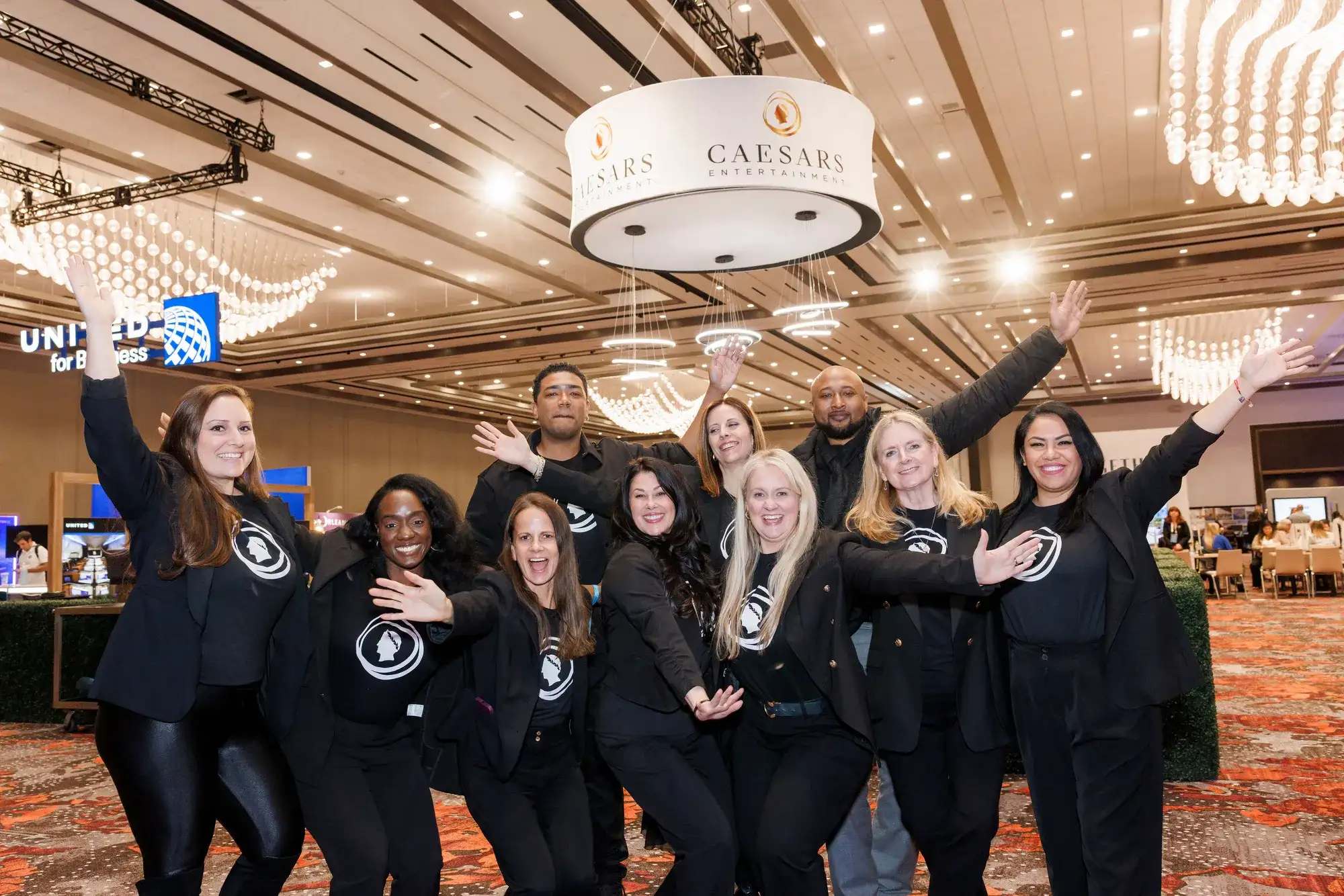
Here's what separates Las Vegas luxury resorts from convention centers in other cities: They're not just venues. They're fully integrated ecosystems where sleeping, meeting, eating and entertaining all happen under one roof; or in the case of Caesars Entertainment, across a walkable campus of interconnected properties right in the heart of the Strip.
Caesars Entertainment's Las Vegas portfolio operates more like a small city than a hotel collection. Caesars Palace anchors the campus with thousands of rooms and an enormous footprint of meeting space. Its Caesars Forum, one of the most technologically advanced standalone convention facilities ever built, features the world's two largest pillarless ballrooms. (A pillarless ballroom is exactly what it sounds like: a massive event space with no structural columns interrupting the floor plan. That means every attendee has an unobstructed sightline, planners have flexibility to configure the space and production teams can design lighting, screens and staging without working around obstacles.)
Caesars Forum connects via skybridge to both Harrah's and The LINQ Hotel so attendees can move between sessions, resorts and evening events without ever stepping outside. Together, the portfolio has over two million square feet of meeting space.
Las Vegas Treats Events Like Its Job
Individual resorts don't operate in a vacuum in Las Vegas. The entire city functions as a support system for the convention business, and that makes a meaningful difference for planners.
The Las Vegas Convention and Visitors Authority (LVCVA) actively promotes Las Vegas as a global meetings destination and operates the Las Vegas Convention Center, which just completed a $600 million renovation debuted at the Consumer Electronics Show in 2026. That makes the LVCC a powerful public anchor that complements the Strip's private resort infrastructure, giving planners access to both for the largest valley-wide events.
The city has also invested in the Vegas Loop, an underground all-electric transit system connecting major resort and convention properties. There are currently nine available stations in a buildout that will eventually span 68 miles, so attendees move efficiently across the destination without the stress of traditional ground transportation.
For planners, all this signals something important: Las Vegas isn't just a great place to host an event. It's a city that invests in the meetings business.
Scale Up Without Sacrificing
One of the most persistent ideas about large conferences is that scale requires sacrifice: the bigger the event, the more generic the experience. That's not the case in Las Vegas, and specifically at Caesars.
The Caesars portfolio has everything from major full-service resorts capable of anchoring a citywide convention to intimate boutique hotels ideal for a leadership off-site or a C-suite dinner. A single planner can host a massive general session, a VIP dinner for 50 executives and breakout workshops for hundreds of people across separate venues that all feed into the same hotel room block, the same catering team and the same event services account.
What's New Right Now
Caesars Palace has undergone an extensive renovation of its luxury suites and premium rooms, introducing redesigned accommodations with contemporary aesthetics, elevated finishes, expanded living spaces and upgraded technology. The OMNIA Dayclub & Skybar has debuted at Caesars Palace, connecting to OMNIA Nightclub via a dedicated bridge to create a seamless day-to-night experience that gives event attendees an only-in-Vegas moment to end each conference day. It draws inspiration from iconic beach clubs of Mykonos, Saint-Tropez and Ibiza, with two central pools, private cabanas and a custom LED main stage.
Meanwhile, the former Cromwell is being reimagined as The Vanderpump Hotel, a design-driven boutique property in partnership with hospitality personality Lisa Vanderpump. The rooftop venue formerly known as Drai's has been reimagined as Soleia, a sophisticated event space with 360-degree views of the Strip, a spectacular option for a closing night reception or an executive networking event.
For Next-Gen Attendees
Designing an event for 2026 means designing for Gen Z and Millennial attendees, two groups whose expectations look very different from the old "coffee break and a ballroom" model.
Across its portfolio, Caesars has expanded wellness-focused programming: think healthier, nutrient-rich food and beverage options, mindfulness-driven break experiences, movement-friendly spaces and outdoor activations designed to support balance during multi-day events. Caesars Forum’s LEED Gold design makes this particularly tangible, with biophilic elements (natural light, organic textures and desert-inspired palettes) that research consistently links to higher creativity and improved engagement. Planners can also activate turnkey corporate social responsibility programming through the "Caesars Means Business" platform, letting organizations align their events with the values their attendees actually hold.
The Bottom Line
Las Vegas has a reputation for spectacle, but its real advantage for event planners is structural. The logistics that typically consume the most planning energy, such as room blocks, transportation, catering, entertainment, are consolidated here in a way they aren't in most major cities. The Caesars portfolio reflects that: a network of properties that can absorb a 10,000-person conference or a 40-person executive dinner without requiring planners to stitch together vendors across town.
The city has also continued investing in its own meetings infrastructure. Think the renovated Las Vegas Convention Center, the Vegas Loop and ongoing resort improvements. These upgrades matters because it signals staying power, not just current inventory.
For planners weighing destinations, Las Vegas isn't a compromise or a novelty pick. It's a place that has spent decades building specifically for this use case, and it shows.
FAQ
Which other Caesars Entertainment properties in Las Vegas work well for conferences and events?
Paris Las Vegas offers over 140,000 square feet of meeting space, and Harrah's Las Vegas has 27,000-plus square feet in a prime mid-Strip location. Horseshoe Las Vegas, currently being renovated, is also repositioning as a strong group option with one of the best mid-Strip locations in the Caesars lineup.
Do Caesars Rewards apply across all properties during conference stays?
Yes. Points accumulate on room spending, dining and other eligible charges across the full Caesars portfolio. For corporate travelers who rotate between properties depending on the conference, points stack regardless of which property you're staying at.
Can a company block rooms across multiple Caesars properties for a large group?
Yes. Caesars has a dedicated group sales team that can coordinate multi-property room blocks. These are useful when a single property can't accommodate your full headcount. Contact group sales early; peak-date inventory moves fast.
Which Caesars properties are built for large-scale Las Vegas conferences?
A few stand out for serious conference volume. Caesars Palace offers the most integrated resort experience at scale, with meeting facilities, dining and entertainment all on one property. Paris Las Vegas handles multitrack conferences well with flexible, multilevel meeting space that can also scale down for intimate client dinners. The right fit depends on your group size, format and how much the after-hours experience factors into the decision.
Related Articles
Why Vegas Travelers Choose Suites When Business Comes With Them
Your Vegas Guide to Mixing Business with Luxury
A Look Into The High-End Side of Vegas