
Key Takeaways
- High-limit gaming in Las Vegas has moved from semi-hidden pits to formal parlors to more relaxed and residential-feeling rooms.
- In the 1990s and early 2000s, casinos built formal high-limit rooms with private cages, luxe finishes and structured minimums.
- Caesars Palace's new Aureus Lounge and Palace Court Slots mix visible high-stakes play with an accessible, design-forward lounge scene.
At one time in Las Vegas, high rollers were ushered into tucked-away rooms just off the main floor, where limits were quietly raised and credit lines extended by hand.
Privacy felt real: semi-closed doors (laws passed in 1959 stipulated that Las Vegas gaming be open to the public), smoke-filled air and a sense that you were stepping behind the curtain of the casino’s public performance. But high-stakes gaming and the environments that casinos have tailored for their guests have come a long way since those early days. From roped-off pits to palatial parlors to today's more residential expression of luxury, we trace the arc of high-limit gaming in Las Vegas.
Caesars Raises the Stakes
When Caesars Palace opened in 1966 with imported marble, rosewood and an 800-seat theater restaurant, it quickly became synonymous with glamorous high-stakes play. Stars like Frank Sinatra, John Wayne, Eydie Gormé and Johnny Carson convened for the $1 million opening party aimed at high-rolling gamblers and bookmakers. In the 1960s and ’70s, high-limit experiences were about personal relationships and ad hoc privilege as much as they were about decor.
This was the era before the “VIP lounge”; playing with the high rollers was intimate and often improvised. Instead of only raising limits on the main floor, casinos increasingly roped off pits and side rooms for higher-denomination blackjack, baccarat and slots, with comps and personal service for spendy players. By the 1980s, older poker and table spaces at many properties were transformed into special rooms to cater to them.
The Rise of Formal High-Limit Rooms
By the 1990s and early 2000s, Las Vegas casinos’ high-limit gaming options began to formalize, reflecting more nuanced regulation and a global, sophisticated clientele. Casinos created exclusive areas for high rollers (then defined as wagering at least $20,000 per hand or $500 per slot pull) to gamble privately. Dedicated high-limit rooms appeared, and with them, separate cages, upgraded finishes and higher minimum wagers on blackjack, baccarat and roulette.
Caesars, which had originally built on the idea that every guest should feel like a Roman emperor, leaned into its imperial mythology, turning high-limit rooms into mini-palaces of marble, gold and plush seating. The 1990s and aughts marked a clear inflection point in Las Vegas's evolution. High-limit spaces became functional and symbolic of the guests that resorts aimed to attract. The spaces (and the personalized privileges that came with them) kept players loyal to “their” casino.
The New Language of Exclusivity
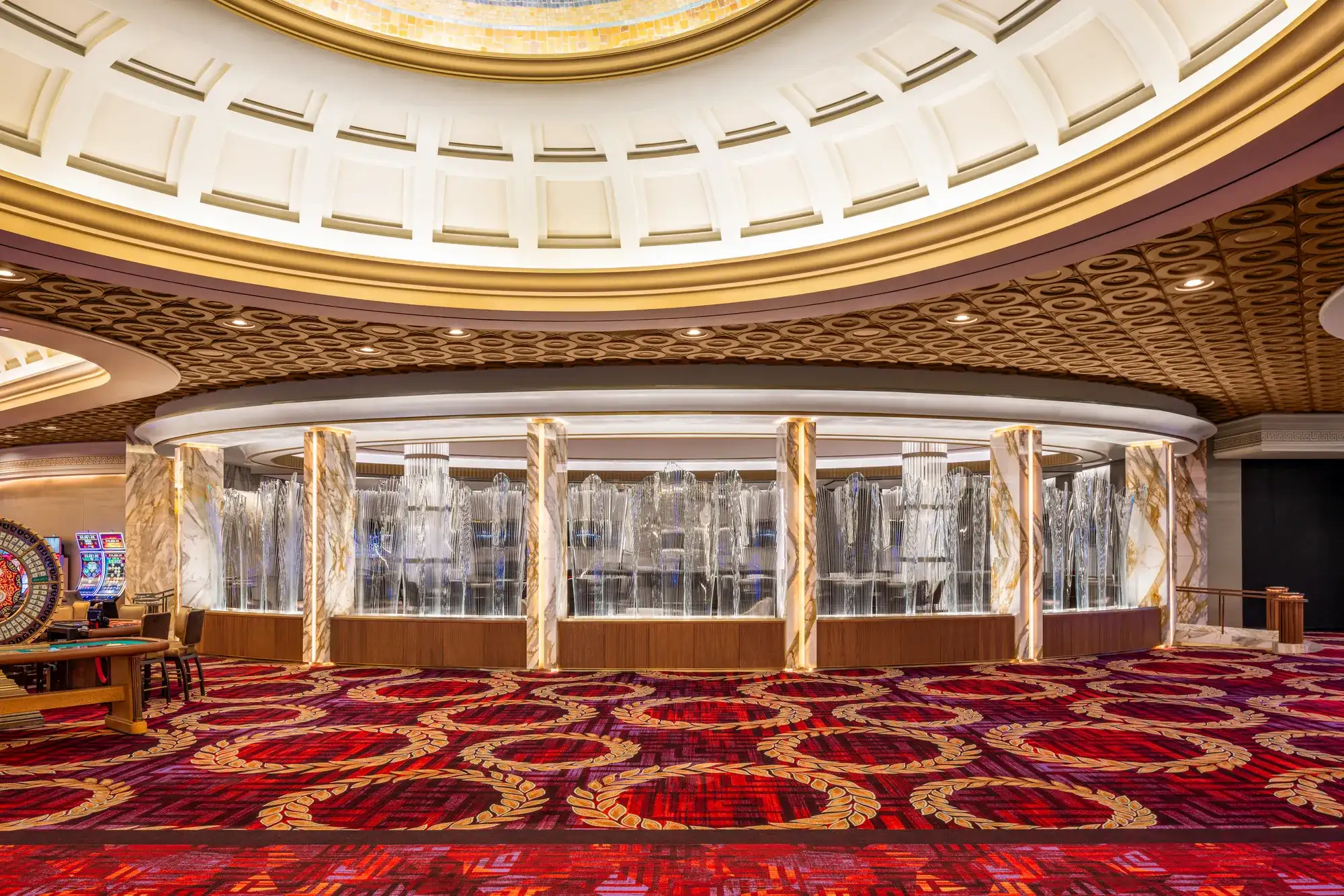
Today’s high-limit gaming experience has dialed back the palatial finishes and gilt edges. It is intensely design-driven, with casino hotels approaching the newest rooms the way they design their best suites: custom lighting, original art, one-of-a-kind fixtures created by master artisans, crystal installations and finishes in materials imported from faraway destinations.
At Caesars Palace, the latest generation of high-limit spaces puts this shift into sharp focus. Where some casinos’ high-roller venues may have never been seen by most players, Caesars’ new rooms showcase a more accessible feel. The newly built Aureus Lounge and Palace Court Slots were carved out of the former Alto Bar and constructed as a unified environment. The combined space adds a dedicated cashier’s cage, an intimate bar and table games like blackjack and roulette, all buffered from the main floor traffic. This is the contemporary version of that 1960s glamour: semi-open to the casino's energy yet spatially separated enough to feel like a club within a club.
At the center of Aureus Lounge (named after the ancient Roman gold coin) is an intimate, circular marble-topped bar, lit by contemporary gold installations and surrounded by red upholstered stools offering unobstructed views of the gaming floor. Open 24 hours a day to anyone over 21, it’s a great place to escape the action and try some high-end spirits. The cocktail menu features a build-your-own Old-Fashioned or Manhattan with top-shelf whiskeys as well as themed specialty cocktails, like the vodka-and-amaretto-based “Lady Luck.” These rooms are less focused on the minimum bets and more on returning to a timeless glamorous experience.
Why High-Limit Gaming Still Defines Luxury Vegas
If early high-limit rooms were about who you knew, and the next phase was about how big you were willing to bet, today’s environments are about seamless service and invisible technology. Personal hosts for high rollers now orchestrate not only gaming but everything from restaurant reservations to sold-out shows to aviation logistics. Behind-the-scenes digital credit management, increasingly sophisticated surveillance and security and private cages keep the experience safe without disrupting the fantasy.
And as Las Vegas has evolved, high-limit gaming remains one of the city’s most enduring luxury experiences, acting as the quiet engine of resort prestige. What has changed is the vocabulary. The smoky back room has become a curated parlor; hosts backed by layers of technology orchestrate seamless experiences; and hidden chambers have transformed into statement pieces, with their own bars, cocktail programs and art collections.
Las Vegas may have morphed into a sea of billion-dollar residencies, Michelin-level dining and high-flying entertainment, but the core appeal of high-limit play is constant: a small number of people in a meticulously considered space, placing sometimes sky-high bets in a way that feels both intimate and extravagantly Vegas.
FAQs
How has high-limit gaming at Caesars changed from the early days to its new rooms?
Historically, high-limit action at Caesars lived on the main floor or in traditional parlors. Today’s Aureus Lounge continues that welcoming spirit: Any guest who meets the minimum can play, and any guest over 21 can enter the social lounge and bar.
What makes Aureus Lounge different from a traditional high-limit room at Caesars?
The lounge blends its own circular bar, sports viewing and a social atmosphere, offering blackjack, roulette and baccarat with limits ranging from $100 to $10,000.
How does Aureus Lounge connect to Palace Court Slots and the rest of the Caesars Palace casino floor?
Aureus Lounge sits near Stanton Social Italian and is directly connected to Palace Court Slots, with a central casino cage between them so guests can move easily between high-limit tables and slots.
Related Articles

How To Maximize Every Moment (and Every Loyalty Point) on Your Next Vegas Trip
Why Prestige Still Matters When Choosing a Luxury Las Vegas Resort